
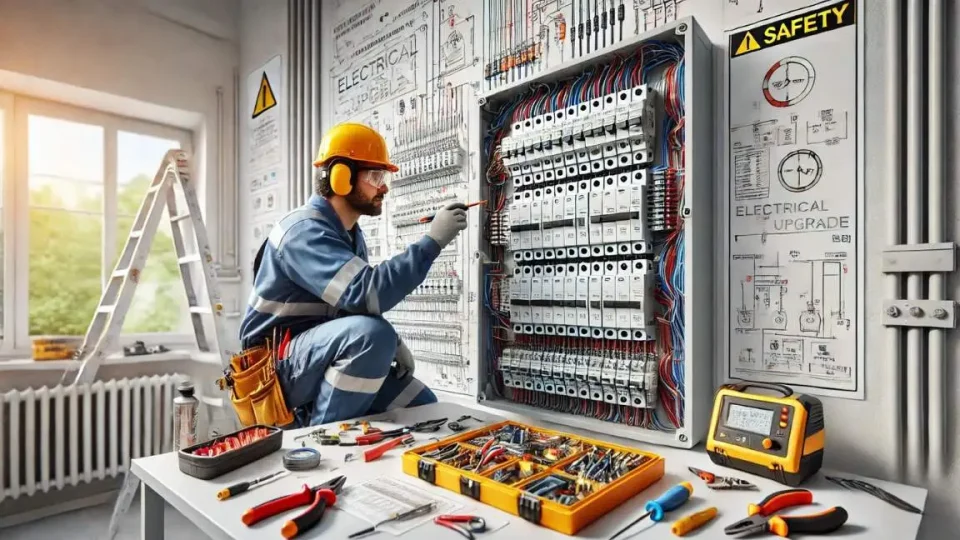
Equipment facilities expect real production improvements from new equipment—faster speeds, better quality, reduced downtime. Yet they get a machine that only does about fifty percent of what the brochure says. The equipment is fine. It can do whatever it’s supposed to do. But something holds it back. And that something is, more often than not, the electrical infrastructure and control systems in place ill-prepared to manage such loads.
It’s frustrating when equipment can or should be doing things that well it well within the realm of expectation, but when money is spent on an upgrade for better production, and production barely increases—blame goes on the equipment when in reality—most of the time—it’s the antiquated, electrical systems that surround the new equipment that do the most disservice.
When Power Supply Holds Everything Back
New equipment doesn’t need just any amp to run. New equipment needs the right voltage, clean power, no electrical noise, proper grounding. The sad reality of many facilities is that they cannot accommodate this power quality and stability. When power glitches happen—this is when all hope goes array.
Equipment runs poorly with poor power. Variable speed drives act erratic. Precision controls fail to hold. Motors overheat and stall. Yes, everything runs to a degree—but not at rated capability.
But this is frequently how facilities run their new equipment—with existing electrical systems as is. If the amp breaker is big enough and the wires can accommodate as is, then everything should be fine. Extra power shouldn’t matter if everything runs in tolerance. But it does to new equipment.
The ability to receive Systems Level Communication
New equipment doesn’t work in a silo; it needs to communicate with other pieces of equipment, control systems and monitoring applications. This requires good networking capabilities, protocols and integrations that work within what exists. When systems fail to communicate, they are unable to work with other parts of the line.
A good electrical control systems installation can help new equipment integrate with existing systems instead of working by itself. A machine that cannot communicate upstream or downstream creates bottlenecks no matter how capable it may be.
Signal quality matters more than people realize. Control wiring must be properly routed, shielded and secured. When a signal wire crosses close to power or is poorly terminated, control signals fail. Equipment receives bad signals or timing shifts while production suffers.
The Coordination Mess
Production exists on processing lines for a reason; machines have to work with one another in tandem for cohesion. New equipment—even new and better—has better specifications than older but it still has to work with what’s behind it and in front of it. If the control systems fail to integrate all parts properly then a faster machine simply replaces an old bottleneck with a new one.
Cycle times get all skewed, machines sit idle waiting on upstream action, downstream machines back up—new machines could run faster but systems fail to account for general flow.
Network latencies, flaky communications or old control programming prevents systems from integration properly. It’s the electrical and control infrastructure that connects everything that determines if improvements work as production improvements or simply move problems somewhere else.
Data That Goes Nowhere
New equipment produces tons of data—from running parameters to production counts to fault conditions and preventative maintenance flags—that help improve production through optimization and preventative operation—but only if data collection provides entries into something useful.
Poor networking systems, overburdened control systems or failing integration mean data is never collected or lost in translation. Equipment holds so much promise for providing useful information but the environments supporting such capability cannot handle what they want to share.
Facilities are left with equipment that should provide sophisticated insight but merely works in manual mode because the electrical/control infrastructure failed to keep up with modern-day data capabilities.
Electrical Noise Nobody Planned For
Electrical noise is one of those things that comes up but it’s unclear why—poor grounding, bad shielding or interference from other systems means malfunctioning equipment acts up for no good reason.
Sensors act erratically. Precision controls can’t hold settings. Communication drops out between devices unexpectedly. Equipment isn’t stopped in its tracks—it simply fails to run as effectively as possible under unknown conditions.
Grounding and noise mitigation requires expert deployment during installation; when these elements go wrong, they cause improper operation when everything is mechanically solid and properly maintained.
Safety Systems That Don’t Work Together
Newer safety features are automatically included on new pieces of equipment beyond what their predecessors used. These components must work hand in hand with pre-existing emergency systems. If e-stops, safety interlocks or shutdown sequences are not properly integrated into what exists, equipment cannot run at its full speed.
Poor integration limits certain speed through safety measures or allows certain speed through gaps made by accidents. Either way production suffers—artificially through speed limits or scientifically through safety incidents that shut operations down.
Power Quality Affecting Everything
Modern machines—especially VFDs and automation—impact the power quality throughout facilities themselves. Without safeguards in place, they impact other machines big time and expand power costs significantly.
Facilities often realize after obtaining new equipment that their older machinery starts acting up or their power bill skyrockets. New equipment impacts the power quality of the entire facility and the electrical infrastructure cannot accommodate it.
Power factor correction, harmonic filtration and load distribution must be addressed during installation; when these items go missing it severely restricts how new equipment can run without consideration for older machines that have been running without fault all along.
Why One Machine Affects Everything
When one machine runs subpar due to electrical shortcomings it impacts far more than just that machine—the throughput expected through a production schedule fails to materialize; maintenance increases due to poorly running machines stressed out; energy use increases due to poor power factor.
The investment fails to pay off because supporting systems fail at what could be potentially decent operations; facilities overspend on capacity because they think an extra purchase will help—even though older machines fail to run at rated capacity due to their electrical/control surroundings.
How to Get it Right
There’s no reason why changes need to be made post-arrival or operation over delayed performance due to electrical/control considerations; these things should be factored into the situation before they arrive and throughout the installation period with adequate forethought.
Only then can current infrastructure be assessed, gaps identified and needed improvements ranked so any excess is minimized. This means integrating the electrical/control work as part of a general improvement strategy instead of one hoped for on the cheaper side afterward; it’s only the electrical/control infrastructure that decides if equipment capabilities become projected production capabilities or unrealized potential.
Facilities who get this right spend appropriately to invest into electrical/control systems as part of adding equipment; facilities who do not find themselves receiving machines that could do miracles but ultimately fall flat because there are no anticipated production improvements despite substantial expenditures.
