
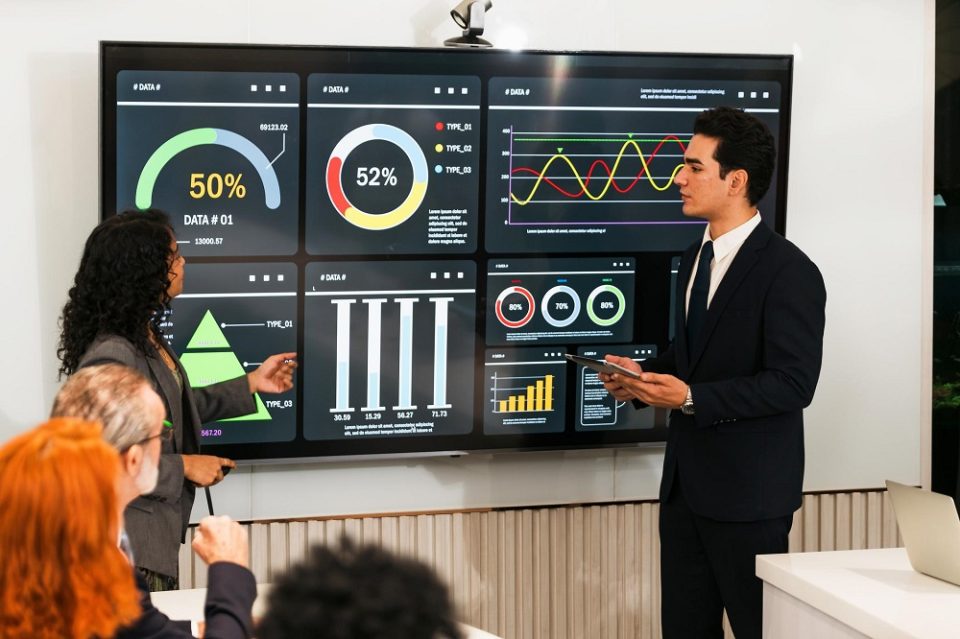
Modern executives operate in environments defined by speed, uncertainty, and constant information flow. Decisions that once took weeks now must be made in hours or even minutes. In this landscape, digital dashboards have become essential tools for leadership teams seeking clarity, accuracy, and confidence in strategic decision making.
Digital dashboards transform raw data into structured insights. They help executives identify risks earlier, recognize opportunities faster, and align teams more effectively. Instead of relying on fragmented reports or delayed updates, leaders gain a real time view of business performance across departments.
This article explains how digital dashboards strengthen executive decision making through practical applications, structured insights, and real operational benefits.
What Is a Digital Executive Dashboard
A digital executive dashboard is a centralized visual interface that presents critical business metrics in an organized and accessible format. It integrates data from multiple sources and converts it into charts, indicators, summaries, and alerts designed specifically for leadership use.
Unlike operational dashboards built for analysts or managers, executive dashboards focus on high level performance indicators that support strategic decisions.
Typical executive dashboards include:
- Revenue performance tracking
- Customer growth indicators
- Operational efficiency metrics
- Market expansion progress
- Financial risk indicators
- Workforce productivity summaries
These dashboards allow leaders to monitor the organization without needing technical expertise in data analysis.
Why Executives Need Digital Dashboards Today
Leadership decisions depend heavily on timing and accuracy. Traditional reporting methods often create delays between events and executive awareness.
Digital dashboards solve this challenge by delivering:
- Immediate visibility into performance trends
- Simplified interpretation of complex datasets
- Consistent tracking of strategic goals
- Early warning signals for emerging risks
- Alignment across departments
Executives who rely on dashboards reduce uncertainty and improve response speed during critical moments.
Real Time Visibility Improves Strategic Timing
One of the most important advantages of digital dashboards is real time visibility. Instead of reviewing weekly or monthly reports, executives can monitor performance as it evolves.
This enables faster responses to:
- Sales fluctuations
- Supply chain disruptions
- Customer behavior shifts
- Market volatility
- Operational bottlenecks
For example, a sudden drop in regional sales performance can appear instantly on an executive dashboard. Leadership teams can investigate causes and deploy corrective strategies before losses escalate.
Real time awareness transforms reactive leadership into proactive decision making.
Simplifying Complex Data Into Actionable Insights
Executives rarely have time to review detailed spreadsheets or technical analytics documents. Digital dashboards simplify large datasets into clear visual signals.
Dashboards typically present:
- Trend lines
- Performance comparisons
- Heat maps
- Progress indicators
- Forecast summaries
This structure helps executives quickly answer essential questions such as:
Are we meeting targets
Which department needs attention
Where are risks increasing
Which investments are producing results
Visual clarity supports faster interpretation and stronger decision confidence.
Supporting Cross Department Alignment
Organizations often struggle with fragmented information across departments. Finance, operations, marketing, and human resources may track performance differently, making coordination difficult.
Digital dashboards solve this issue by creating a shared performance framework.
Benefits include:
- Unified visibility across teams
- Consistent definitions of success metrics
- Reduced reporting conflicts
- Improved collaboration between leadership groups
When executives review the same data in the same format, strategic alignment improves naturally.
Strengthening Forecast Accuracy
Forecasting plays a central role in executive planning. Digital dashboards integrate predictive analytics that improve accuracy and planning reliability.
Dashboards support forecasting by:
- Highlighting seasonal trends
- Comparing historical performance patterns
- Identifying emerging market signals
- Monitoring pipeline movement
- Tracking customer acquisition behavior
Executives can adjust strategies earlier when forecasts shift direction.
Instead of reacting to surprises, leadership teams prepare for expected outcomes.
Improving Risk Detection and Management
Risk awareness is one of the most valuable capabilities digital dashboards provide executives.
Dashboards monitor indicators such as:
- Cost overruns
- Declining margins
- Customer churn increases
- Supplier delays
- Compliance issues
Visual alerts allow leadership teams to recognize risks before they escalate into operational disruptions.
For example, if procurement costs rise beyond projected thresholds, dashboards immediately highlight deviations. Executives can respond with supplier renegotiations or sourcing adjustments.
Early visibility reduces the financial impact of unexpected challenges.
Enhancing Meeting Productivity and Decision Speed
Executive meetings often suffer from excessive time spent reviewing background information rather than making decisions.
Digital dashboards change meeting dynamics significantly.
Leadership teams can:
- Begin discussions with shared performance insights
- Focus on strategic priorities immediately
- Reduce presentation time
- Eliminate outdated reporting confusion
- Reach decisions faster
Instead of debating which data is correct, executives discuss what actions should follow.
This improves both meeting efficiency and decision quality.
Supporting Data Driven Leadership Culture
Organizations increasingly rely on evidence based strategies rather than intuition alone. Digital dashboards reinforce this shift by embedding data into everyday leadership routines.
Executives who regularly review dashboards develop stronger habits around:
- Measuring performance consistently
- Validating assumptions with evidence
- Identifying opportunities objectively
- Tracking long term strategy progress
Over time, this strengthens organizational accountability and transparency.
Teams begin aligning their work around measurable outcomes rather than informal expectations.
Enabling Mobility for Modern Executives
Executives rarely remain in one location throughout the day. Meetings, travel, site visits, and stakeholder engagements require continuous access to performance data.
Modern dashboards support mobile accessibility across devices such as:
- Tablets
- Smartphones
- Secure cloud platforms
- Remote leadership portals
This ensures leaders can review performance indicators anytime decisions are required.
Mobility improves responsiveness during negotiations, partnerships, and operational reviews.
Encouraging Accountability Across Leadership Teams
Executive dashboards clarify responsibilities across departments by linking performance indicators directly to leadership roles.
For example:
- Finance leaders track margin stability
- Operations leaders monitor delivery performance
- Marketing leaders review acquisition efficiency
- Human resource leaders evaluate workforce engagement
When performance metrics remain visible and updated regularly, accountability increases naturally.
Leadership teams become more proactive in managing their strategic responsibilities.
Improving Investor and Stakeholder Communication
Executives must communicate clearly with investors, board members, and external partners. Digital dashboards support this responsibility by organizing performance information into structured summaries.
Dashboards help executives:
- Present progress transparently
- Explain performance trends clearly
- Demonstrate accountability
- Support funding decisions
- Build stakeholder confidence
Clear communication strengthens trust between leadership teams and external stakeholders.
This trust becomes especially important during periods of change or uncertainty.
Accelerating Scenario Planning and Strategy Adjustment
Executive decisions often depend on evaluating multiple strategic scenarios. Digital dashboards support scenario planning by presenting alternative projections and performance comparisons.
Executives can analyze:
- Expansion opportunities
- Budget reallocations
- Market entry strategies
- Workforce adjustments
- Investment priorities
Dashboards allow leadership teams to compare options quickly using consistent performance indicators.
This improves strategic flexibility and reduces hesitation during uncertain market conditions.
Reducing Dependence on Manual Reporting Processes
Traditional reporting methods require analysts to compile presentations manually. These processes introduce delays and increase the risk of reporting errors.
Digital dashboards automate data integration across systems such as:
- Financial platforms
- Customer relationship systems
- Operations software
- Sales tracking tools
- Workforce analytics platforms
Automation improves reporting accuracy and frees analysts to focus on higher value insights rather than repetitive data preparation.
Executives receive faster updates with fewer inconsistencies.
Supporting Long Term Strategic Monitoring
Executive decisions rarely affect only the present quarter. Most leadership strategies involve multi year goals that require continuous monitoring.
Digital dashboards help track long term initiatives such as:
- Digital transformation progress
- Market expansion milestones
- Sustainability targets
- Innovation investments
- Workforce development goals
This ensures leadership teams remain aligned with strategic priorities even as short term challenges emerge.
Consistency across time strengthens organizational direction.
Frequently Asked Questions
What types of industries benefit most from executive dashboards
Industries with complex operations such as healthcare, finance, manufacturing, logistics, retail, and technology benefit significantly because they rely heavily on timely performance monitoring.
How often should executive dashboards be updated
Most executive dashboards update in real time or near real time depending on system integration capabilities and operational needs.
Do digital dashboards replace business analysts
No. Analysts remain essential for interpreting trends, identifying deeper insights, and supporting strategic recommendations beyond dashboard summaries.
Are executive dashboards difficult to implement
Implementation complexity depends on data infrastructure quality. Organizations with integrated systems typically deploy dashboards faster than those with fragmented data environments.
Can dashboards integrate external market data sources
Yes. Many dashboards combine internal operational data with external economic indicators, competitor benchmarks, and market performance signals.
How do dashboards improve board level reporting
Dashboards organize performance indicators into structured visual summaries that make board presentations clearer and more efficient.
What skills executives need to use dashboards effectively
Executives benefit from basic data literacy skills, including understanding performance indicators, interpreting trends, and evaluating forecast assumptions.
